Life After Cancer Isn’t About Going Back—It’s About Rebuilding
One of the most common things we hear from cancer survivors is this:
“I just want to get back to my normal routine.”
But what happens when that routine doesn’t fit anymore?
What many people don’t expect is that even after treatment ends, or even when things are “medically fine”, life can still feel unfamiliar. Tasks that once felt easy may now take more effort. Your energy may fluctuate. Your priorities may have shifted in ways you didn’t anticipate.
And yet, there’s often an internal pressure to return to who you were before.
The truth is:
You’re not the same person you were before your diagnosis.
Trying to force your old routine to fit your new reality can leave you feeling frustrated, stuck, or like you’re falling behind.
But this isn’t failure…it’s adaptation.
Why Your Old Routine Doesn’t Work Anymore
A cancer diagnosis doesn’t just impact the body—it changes how your entire system functions.
From a physiological perspective, your body has experienced prolonged stress, inflammation, and shifts in cellular energy production. From a nervous system perspective, it has adapted into a heightened state of awareness, often referred to as a survivor state.
This means:
- Your energy may not be consistent
- Your tolerance for stress may be lower
- Your cognitive capacity may fluctuate
- Your need for recovery is higher
So when you try to return to your old routines, without adjusting for these changes, it can feel like something is wrong.
But nothing is wrong.
Your system is asking for a different approach.
The Shift: From “Normal” to Aligned
Instead of asking:
“How do I get back to my old life?”
A more helpful question is:
“What does a supportive life look like for me now?”
This shift moves you from comparison into alignment.
Because rebuilding your life after cancer isn’t about doing everything you used to do.
It’s about doing what actually supports your current capacity, energy, and priorities.
3 Ways to Start Rebuilding Your Routine
1. Plan Around Your Energy—Not the Clock
One of the most important shifts is learning how to work with your energy instead of against it.
Start by noticing:
- When do you feel most alert?
- When do you typically crash?
- What activities drain you faster than expected?
From there, begin to structure your day around those patterns.
This might mean:
- Scheduling important tasks earlier or later in the day
- Allowing more time for transitions
- Letting go of rigid timelines
Consistency may not come from doing the same thing every day, but from responding to your body consistently.
2. Prioritize Differently Than You Used To
Many survivors were high-achieving, productive, and used to doing a lot.
But after cancer, capacity changes.
This is where prioritization becomes essential:
- What actually needs to get done?
- What can wait?
- What can be simplified or delegated?
You may also find that your values have shifted.
Things that once felt urgent may no longer matter in the same way.
And that’s not something to resist—it’s something to explore.
3. Build Recovery Into Your Routine (On Purpose)
One of the biggest mistakes people make (even non-cancer survivors!) is planning their days based only on output.
But after cancer, recovery isn’t optional—it’s foundational.
This includes:
- Rest between tasks
- Time to decompress after social or work demands
- Space for your nervous system to settle
Recovery isn’t a sign that something is wrong.
It’s part of how your system rebuilds.
The Identity Shift No One Talks About
Beyond the physical changes, there’s also a deeper shift happening…
Your identity is evolving.
You may notice:
- You don’t want the same things you used to
- Your tolerance for stress or environments has changed
- You’re more aware of what drains or supports you
This can feel disorienting, but it’s also where growth happens.
Because becoming a “thriver” isn’t about returning to who you were.
It’s about becoming someone who:
- Understands their body
- Makes decisions with awareness
- Builds a life that actually supports their health
From Survivor State to Thriving
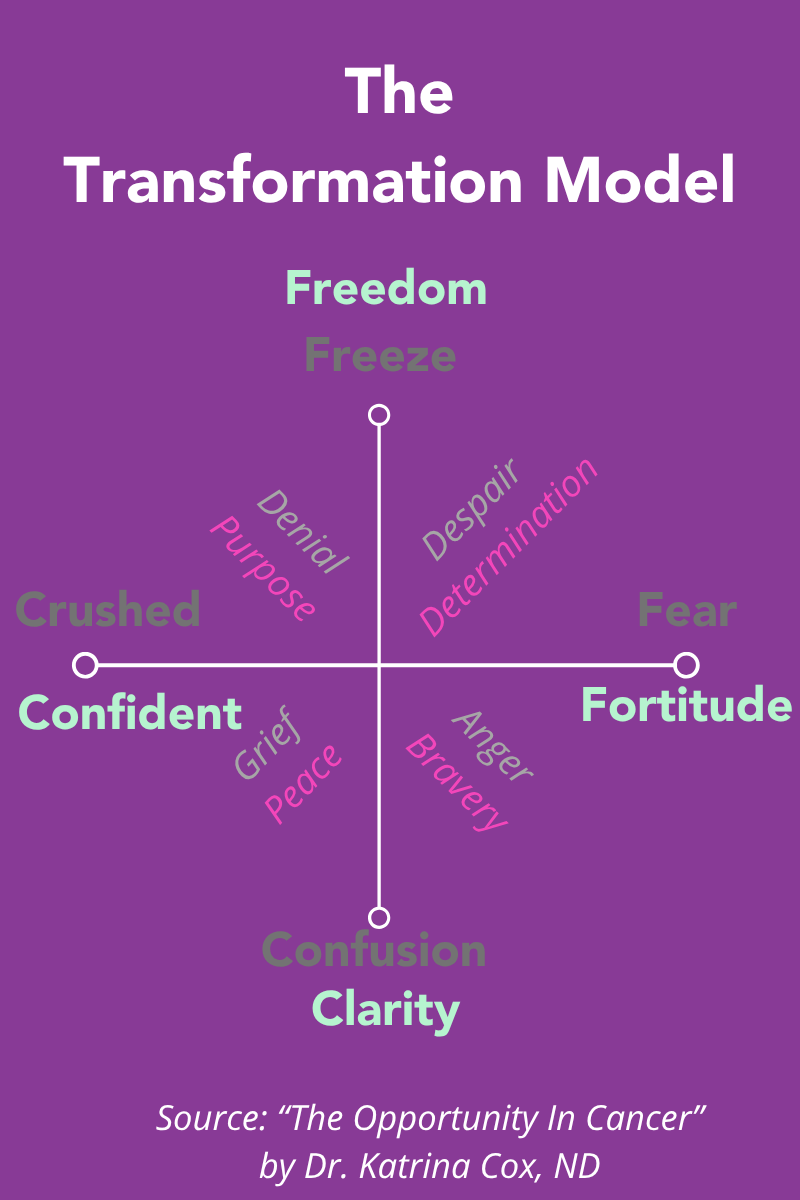
In The Opportunity in Cancer, we talk about moving from:
- Frozen
- Afraid
- Crushed
- Confused
into:
- Freedom
- Fortitude
- Confidence
- Clarity
I call this the Transformation Model, but this transition doesn’t happen all at once.
It happens through small, consistent decisions:
- Adjusting your routine
- Listening to your body
- Creating space for recovery
- Letting your life evolve
You’re Not Falling Behind—You’re Rebuilding
If your old routine doesn’t fit anymore…
That doesn’t mean you’ve lost something.
It means you’re being asked to build something new.
Something more aligned.
Something more sustainable.
Something that actually supports your healing and your life.
And that’s not a step backward.
That’s a step forward.
Want More Support?
Download your FREE resources, including the Survivor State Questionnaire and the 8 Pillars of Recovery Questionnaire, by downloading the Read-Along Workbook, as well as the Glossary and Lab Guide that go with the book (hint: getting the book makes them easier to use, but you can use them before getting the book too ;))
Or book your free 15 minute discovery call where we can discuss how I can support you to rebuild your routine after cancer.
Related Articles
Mindset, Stress & Mental Health, Support & Resources
Mindset, Stress & Mental Health, Support & Resources
Mindset, Stress & Mental Health, Support & Resources