For a long time, cancer can become an organizing force in your life.
There are appointments to attend, decisions to make, treatments to complete, symptoms to manage and milestones to reach. Your attention naturally becomes focused on what needs to happen next. Even after active treatment ends, recovery can continue to occupy a significant amount of mental and physical energy.
And then, at some point, a different question may begin to emerge:
What do I want my life to be about now?
It sounds like an exciting question. But for many people after cancer, it can also be surprisingly difficult to answer.
Cancer may have changed your priorities. Your energy or capacity may be different. Relationships may have shifted. Goals that once seemed important may no longer hold the same meaning. At the same time, there can be enormous pressure to make the most of life after cancer—to emerge with a new calling, pursue a bucket list or somehow turn what happened into something meaningful.
But finding purpose after cancer doesn’t require you to reinvent your entire life.
In fact, you don’t necessarily have to find your purpose at all.
You can build it.
Why Can Finding Purpose After Cancer Feel So Difficult?
When so much of your attention has been directed toward survival, treatment and recovery, looking further into the future can feel unfamiliar.
For a period of time, many of your priorities may have been determined for you. Your calendar revolved around appointments. Your choices were influenced by treatment. Your energy went toward getting through what was immediately in front of you.
When that begins to change, the freedom to ask What do I want? can feel both exciting and overwhelming.
You may also discover that the answers you had before cancer don’t fit quite as neatly anymore.
Perhaps your career no longer feels as fulfilling. Maybe certain relationships have become more important while others have changed. You may value your time differently. Experiences you once postponed might suddenly feel more significant.
This doesn’t mean you need to abandon your old life and start over.
It means you have an opportunity to become curious about whether the life you’re building still reflects the person you are today.
You Don’t Have to Make Cancer Your Purpose
There can be an unspoken expectation after a major life experience that you should somehow transform it into a mission.
You might feel pressure to become an advocate, inspire other people, radically change careers or discover a profound reason why cancer happened to you.
You don’t have to.
Cancer can influence your perspective without becoming the defining purpose of the rest of your life.
Your experience may inspire you to help others. It may change the work you want to do or the way you contribute to your community. If that feels meaningful to you, wonderful.
But your purpose can also have absolutely nothing to do with cancer.
It can be raising your family. Building a business. Travelling somewhere you’ve always wanted to go. Creating art. Deepening friendships. Learning something new. Spending more time outdoors. Volunteering. Becoming really good at something simply because you enjoy it.
And sometimes, purpose isn’t something entirely new at all. It can be a new expression of something that mattered deeply to you long before your diagnosis.
Surviving cancer does not create an obligation to make your life extraordinary. It creates an opportunity to decide what makes your life meaningful to you.
Purpose Doesn’t Have to Be One Big Thing
We often talk about purpose as though everyone has one great calling waiting to be discovered.
That idea can make an already big question feel even bigger.
Instead of asking:
What is my purpose?
Try asking:
What feels meaningful to me right now?
Purpose can exist in many places at once.
It can live in your relationships, your work, your creativity, your contribution to your community and the experiences you choose to have.
It can also change.
What gives your life meaning at 35 may be different from what matters at 45 or 65. What mattered before cancer may evolve afterward.
You are allowed to evolve with it.
Reclaiming Your Ability to Choose What Comes Next
 Finding purpose after cancer isn’t only about identifying new goals or deciding what you want your future to look like. It’s also about recognizing the internal state from which you’re making those decisions.
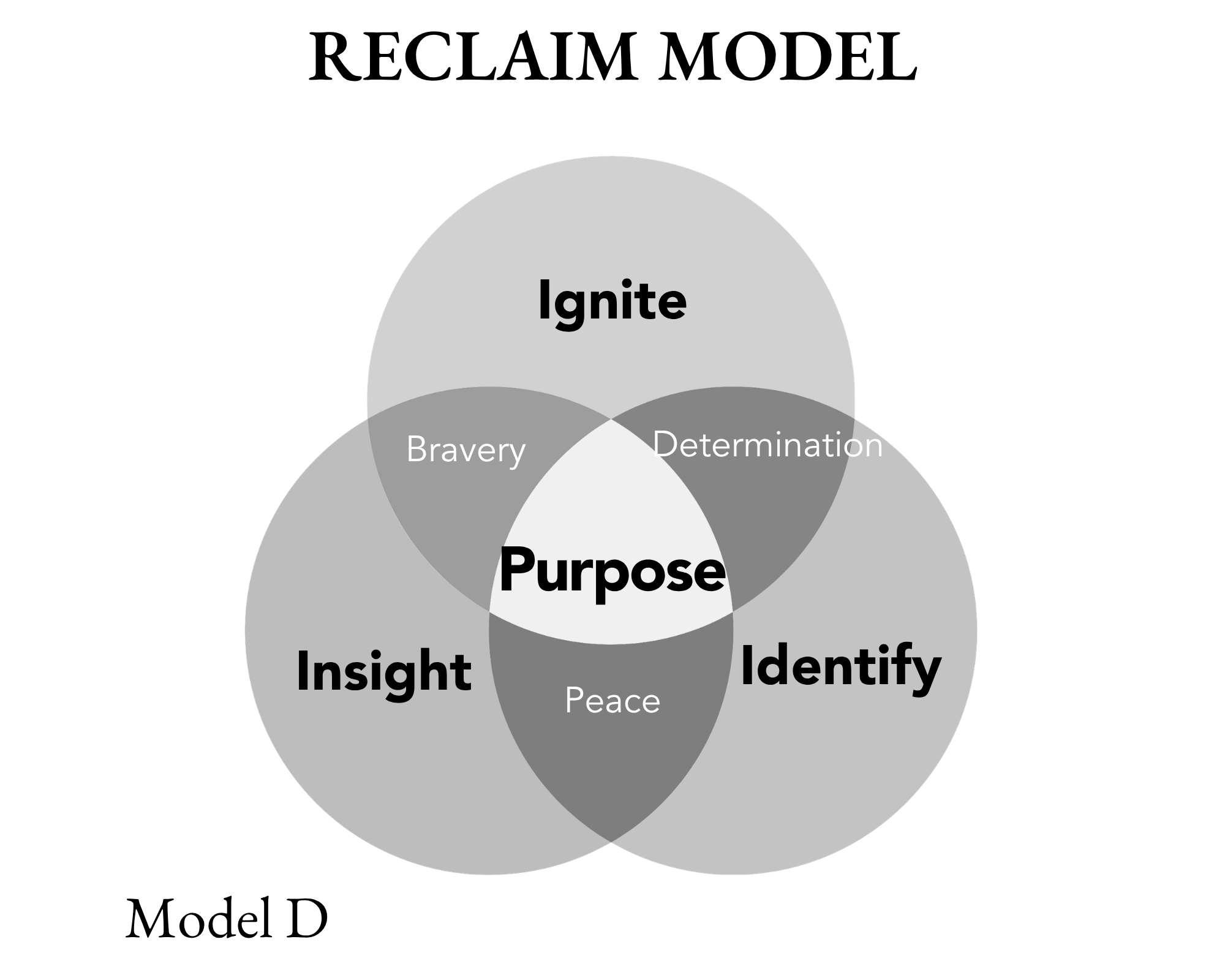
In Chapter 4 of The Opportunity in Cancer, I introduce the REclaim model, the second step in the Climb Through Cancer Recovery™. REclaim focuses on reclaiming our minds and thoughts from perceived stress so that we can begin moving from surviving toward thriving.
Cancer can make it abundantly clear how much of life exists outside our control.
We can’t always control a diagnosis, what has already happened to us, how other people behave or what challenges might appear next. But we can begin to recognize where we do have influence: how we respond, the actions we take and the choices we make moving forward.
Our emotional, stress and Survivor States can affect those choices.
When fear, overwhelm or uncertainty are taking up a great deal of space, our world can become smaller. We may focus more on what could go wrong, what we can’t do or what needs to change before we can move forward.
It can be difficult to imagine an exciting future when so much of our energy is being used to manage the present.
This is one reason purpose sits at the centre of the REclaim model.
Purpose gives us something meaningful to move toward. It can help ground us, provide motivation for change and create direction as we work through the emotional and mental impact of what we’ve experienced.
The goal isn’t to gain control over everything that happens next.
It’s to reclaim your ability to choose how you want to engage with the life in front of you.
That shift can create space.
Space to become curious again.
Space to recognize opportunities.
Space to ask what you actually want.
And space to begin building a life around the answer.
Start With What Feels Meaningful Now
If you’re not sure what you want your next chapter to look like, you don’t need to force an answer.
Start with curiosity.
Ask yourself:
- What am I curious about right now?
- What gives me energy?
- Who do I want to spend more time with?
- What experiences do I want to have?
- What do I want to learn?
- What would I like to contribute?
- What have I been postponing?
- What makes me feel most like myself?
Pay attention to the answers without immediately deciding whether they’re practical.
Sometimes we shut down possibilities before we’ve even allowed ourselves to imagine them.
You don’t need to book the trip today. Quit your job tomorrow. Sign up for the course this afternoon.
First, simply notice what draws you forward.
You don’t need all the answers before you begin.
Curiosity can be enough to get you started.
Move Beyond a Life That Is Simply Manageable
During cancer treatment and recovery, creating stability can be incredibly important.
You may have learned to protect your energy, manage your schedule, prioritize your health and become more intentional about what you take on.
Those skills still matter.
But there may come a point when maintaining stability is no longer the only goal.
You may begin wanting more.
More connection.
More adventure.
More creativity.
More laughter.
More meaningful work.
More experiences that make you genuinely excited about your life.
Wanting more does not mean you’re ungrateful for your recovery or dissatisfied with what you already have.
It may simply mean your attention is expanding.
Instead of asking only, “What can I manage?”, you can begin asking:
“What would make my life feel meaningful?”
Turn Purpose Into Experiences, Not Just Goals
Purpose doesn’t have to live on a vision board or in a five-year plan.
It can show up in what you actually do.
If relationships matter to you, purpose might look like creating more time for the people you love.
If adventure matters, it might mean finally planning the trip you’ve talked about for years.
If creativity matters, perhaps you take the class, start writing again or return to something you once loved.
If contribution matters, you might mentor someone, volunteer, become involved in your community or pursue work that feels aligned with your values.
And if joy matters, you can intentionally make more room for fun.
This is also something we see in the story of Janet in Chapter 4 of The Opportunity in Cancer. Through the REclaim process, she reconnected with her determination to make an impact on young people and recognized the peace she experienced in nature. Ultimately, she found an opportunity that brought those meaningful parts of her life together through volunteering with youth outdoors.
Her purpose wasn’t simply about finding one entirely new thing after cancer. It came from recognizing what already mattered and finding a way to bring those pieces together.
Our own version doesn’t have to look anything like Janet’s.
But we can ask the same question:
What matters to me, and how can I create more space for it in my life?
You Can Build a Meaningful Life While You’re Still Healing
One of the easiest traps after cancer is waiting.
When my energy comes back, I’ll travel.
When I feel less anxious, I’ll make plans.
When I feel like myself again, I’ll decide what’s next.
But healing and living don’t have to happen sequentially.
You don’t have to complete recovery before you’re allowed to participate fully in your life.
There may still be appointments. There may still be uncertainty.
Your energy may fluctuate. Some days may require more flexibility than others.
Living fully doesn’t mean ignoring those realities. It means making room for meaningful experiences alongside them.
You can support your health and plan something exciting.
You can acknowledge uncertainty and make plans for the future.
You can still be healing and experience joy.
The goal isn’t to pretend cancer never happened. It’s to allow cancer to become one part of your story rather than the boundary around everything that comes next.
You Don’t Have to Find Your Purpose. You Can Build It.
Purpose rarely arrives as one dramatic realization.
More often, it develops through the choices you make and the things you continue to move toward.
The people you spend time with.
The work you choose to do.
The places you go.
The things you learn.
The experiences you create.
The opportunities you allow yourself to explore.
And perhaps most importantly, the parts of yourself you choose to reclaim.
You may not have control over everything that has happened or everything that comes next. But as we explore through the REclaim process, there is power in recognizing what you can choose: how you respond, how you act and what you want to move toward.
You don’t need to know exactly what the rest of your life will look like.
You only need enough curiosity to begin asking what you want from it.
So rather than asking yourself to identify your one great purpose, start somewhere smaller:
What would make my life feel a little more meaningful, exciting or alive right now?
Then consider one way you could begin moving toward it.
Because life after cancer doesn’t have to be defined only by how well you recover.
It can also be defined by what you choose to create next.
Want More Support?
Download your FREE resources, including the Survivor State Questionnaire and the 8 Pillars of Recovery Questionnaire, by downloading the Read-Along Workbook, as well as the Glossary and Lab Guide that go with the book (hint: getting the book makes them easier to use, but you can use them before getting the book too ;))
Or book your free 15 minute discovery call where we can discuss how I can support you to rebuild your routine after cancer.
Related Articles

Mindset, Stress & Mental Health, Support & Resources
Mindset, Stress & Mental Health, Support & Resources

Mindset, Stress & Mental Health, Support & Resources