January and the New Year often arrives with pressure to reset, reinvent, and push forward.
But if you’ve lived through cancer, you know something important: healing doesn’t work on a calendar.
This month and the New Year isn’t about starting over.
It’s about integration — learning how to live inside the healing you’ve already done.
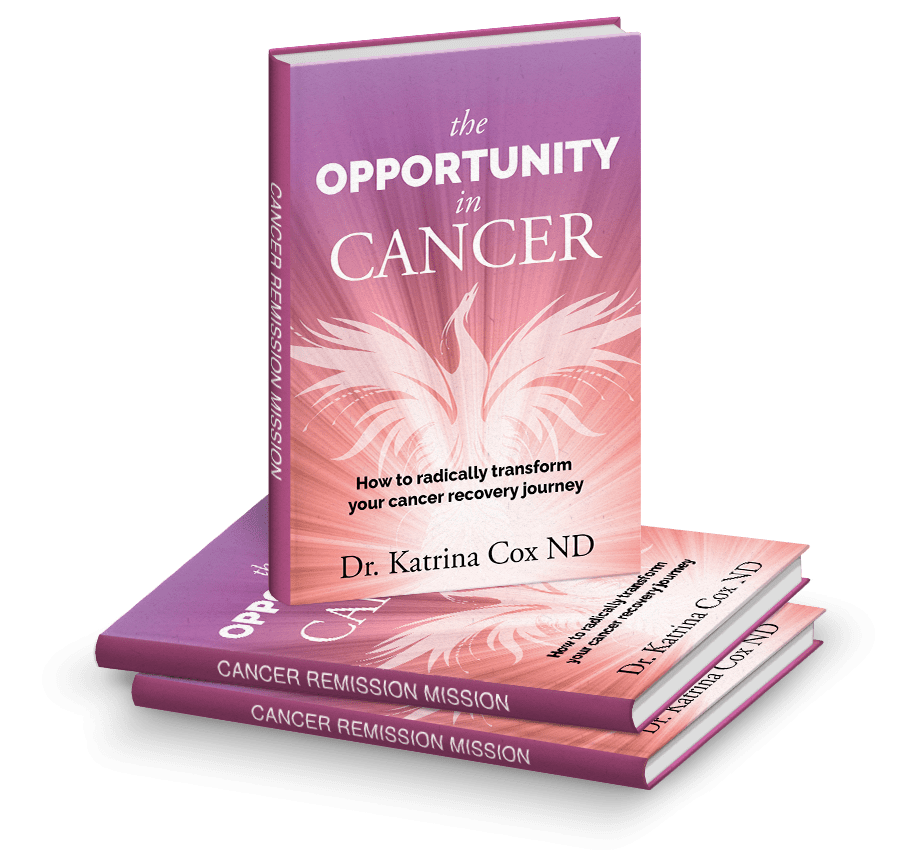
As I talk about in my book, The Opportunity in Cancer, recovery is not a finish line. It is a process of aligning the body, mind, and environment so healing becomes sustainable, not exhausting. January (or really any time of year where the feeling strikes you) is the perfect time to step out of survival mode and into conscious, embodied living.
Why Integration Matters After Cancer
During diagnosis and treatment, your body’s primary goal is survival. Systems shift, priorities narrow, and energy is conserved for what’s essential. Even after treatment ends, many survivors remain in a survivor state — vigilant, braced, and pushing forward “just in case.”
But healing asks something different.
Integration is the phase where:
You stop managing symptoms and start listening to patterns
You move from “doing all the right things” to doing what’s right for you
You learn how to live well without burning yourself out again
Healing continues — but it becomes quieter, steadier, and more embodied.
Revisiting the 8 Pillars of Recovery as a Living System
In Chapter 8 of my book, I introduce the 8 Pillars of Recovery as a framework for understanding the body’s terrain – the internal environment:
- Cellular function
- Epigenetic factors
- Toxin load
- Infections
- Immune system & inflammation
- Endocrine balance
- Digestion
- Structural changes
What’s important to remember — especially in January — is that these pillars are dynamic, not static.
Integration doesn’t mean every pillar is “perfect.”
It means you’re aware of which ones are stable and which need attention right now.
As a gentle January check-in, you can use the 8 Pillars of Recovery Questionnaire to ask:
- Which pillars feel supported?
- Which feel strained after the holidays?
- Where can I offer care instead of control?
This kind of assessment builds trust between you and your body — one of the most important steps in long-term recovery.
If you need a little help on how to do this, check out my Instagram and Facebook for my walk-along-tutorial (coming mid-Jan 2026).
If you don’t have a copy of these questionnaires, pop over to the resources section of my website and grab your copy by opt-ing in to our mailing list (don’t worry, we won’t spam you and you can opt-out at any time).
The Survivor State: Are You Still in Survival Mode?
The other tool we have explored in past blogs and is foundational in the book is the Survivor State Questionnaire. It explores how many of us can remain in fight, flight, freeze, or fawn long after treatment ends.
January often exposes this.
If you notice:
- Difficulty resting
- Anxiety when things slow down
- Guilt when you’re not being productive
- A constant sense of “I should be doing more”
Your nervous system may still be operating from protection, not safety.
Integration begins when you shift from vigilance to regulation — when your body learns that it no longer has to be on high alert to stay alive.
Belief, Biology, and the Environment You Create
One of the most powerful reminders in The Opportunity in Cancer is that your internal environment matters just as much as your external treatments.
Your thoughts, stress levels, sense of safety, and emotional tone all influence cellular communication. Healing is supported when the body feels safe enough to repair, digest, rest, and regenerate.
January is an ideal time to ask:
- What messages am I sending my body each day?
- Does my inner dialogue support healing — or pressure it?
- Where can I soften expectations and strengthen trust?
Integration is not about positive thinking.
It’s about biological safety.
Staying Aligned as You Start to Feel Better
Chapter 11 speaks to transformation — and one of the most overlooked risks after cancer is what happens when energy starts to return.
Feeling better can tempt us to:
- Overcommit
- Drop supportive routines
- Ignore early signs of depletion
- Say yes before checking in with the body
Integration means maintaining alignment even when life speeds up again.
This might look like:
- Keeping boundaries even when you feel “fine”
- Continuing gentle routines that regulate your nervous system
- Protecting sleep, digestion, and movement as non-negotiables
- Choosing consistency over intensity
This is how healing becomes sustainable.
What Living Your Healing Actually Looks Like
The real opportunity isn’t just surviving cancer — it’s becoming more attuned, intentional, and self-led because of it.
Signs you’re integrating your healing:
- You trust your body’s signals
- You pace yourself without guilt
- You value rest as productive
- You choose joy without earning it
- You feel more yourself, even if that self is different than before
This is not regression.
This is evolution.
A Gentle January Reflection
As you move into this new year, consider journaling on these prompts:
- Where has my healing carried me forward?
- Which part of me feels most aligned right now?
- What does living my healing look like — day to day?
You are not starting from zero.
You are standing on everything you’ve already lived through.
Final Thoughts
January doesn’t ask you to reinvent yourself.
It invites you to integrate.
To live your healing quietly, consistently, and with trust.
To let your body set the pace.
To honour who you’ve become — not rush toward who you think you should be.
Want More Support?
Remember to download your FREE resources, including the Survivor State Questionnaire and the 8 Pillars of Recovery Questionnaire, but downloading the Read-Along Workbook, as well as the Glossary and Lab Guide that go with the book (hint: getting the book makes them easier to use, but you can use them before getting the book too ;))
You can also get 1:1 support – book a free 15 minute 1:1 consultation to explore a personalized recovery plan rooted in naturopathic care, emotional wellness, and nervous system repair (Ontario Residents Only).
Related Articles
Mindset, Stress & Mental Health, Support & Resources
Mindset, Stress & Mental Health, Support & Resources

Mindset, Stress & Mental Health, Support & Resources